The United Arab Emirates, represented by its Ministry of Interior, has officially joined INTERPOL’s Steering Committee for the Global Congress on Chemical Security and Emerging Threats. This milestone highlights the UAE’s leadership and proactive role in advancing international cooperation to enhance global safety and stability. With this achievement, the UAE becomes the first Gulf Cooperation Council (GCC) country to gain membership in this significant international body.
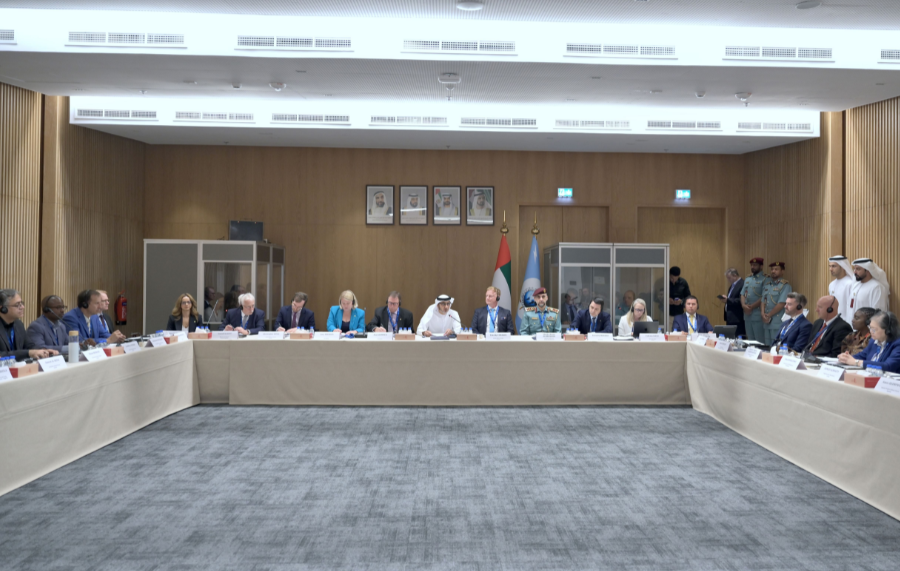
INTERPOL confirmed the UAE’s inclusion as a new member of its Steering Committee during a meeting hosted by the Ministry of Interior in Abu Dhabi. The two-day conference, which gathered senior international representatives, focuses on reinforcing global collaboration to combat chemical threats and fortify the international framework for chemical security. The Steering Committee, a multidisciplinary and multinational advisory group founded in 2022, is responsible for setting the direction and priorities of the Global Congress on Chemical Security and Emerging Threats.
In partnership with INTERPOL and more than 2,000 international experts, the Committee works to strengthen nations’ capabilities to prevent and counter chemical terrorism through sharing expertise and best practices. Its members are instrumental in shaping INTERPOL’s global security agenda, contributing directly to strategic and operational decisions aimed at ensuring global readiness and resilience against chemical threats. During the inaugural session, Brigadier Saeed Abdullah Al Suwaidi, Assistant Undersecretary for Security Affairs at the Ministry of Interior, welcomed delegates and emphasized that the UAE’s hosting of this global meeting underscores its continuing dedication to fostering international collaboration and safeguarding chemical security for global peace and stability.
Brigadier Abdulrahman Al Mansoori, Commander of the Special Security Forces and the UAE’s representative—also the first from the GCC region—stated that the nation’s participation in the Steering Committee reflects its enduring commitment to cooperation and knowledge-sharing in the international security landscape. Participants from global organizations commended the UAE for its role in hosting this pivotal meeting and for its steadfast efforts in enhancing collective capacity to confront chemical threats. They praised the event as a prominent platform for exchanging experience and developing joint strategies to build a safer and more secure world.
The Steering Committee’s remit includes guiding the Global Congress’s key priorities and ensuring multidisciplinary collaboration among professionals to enhance the detection, prevention, and control of illicit chemical activities. Currently, the Committee consists of representatives from 19 INTERPOL member states, four international organizations, and other notable institutions. The Global Congress on Chemical Security and Emerging Threats addresses challenges surrounding chemical weapons and explosives, fostering international cooperation to strengthen prevention, monitoring, and investigative mechanisms while promoting unified global action toward chemical security.
Since its creation in 2018, this global network of over 2,000 experts—co-chaired by INTERPOL, Global Affairs Canada, and the U.S. Defense Threat Reduction Agency (DTRA)—has collaborated with the G7 Global Partnership Against the Spread of Weapons and Materials of Mass Destruction. The latest Steering Committee sessions in Abu Dhabi gathered representatives from INTERPOL, Global Affairs Canada, DTRA, along with regional and international experts to discuss strategies for strengthening chemical security.
During the opening day, discussions centered on improving international cooperation, evaluating recommendations from the 2025 Global Congress Plenary Meeting, and planning a multi-sector exercise in Brazil designed to bolster readiness for chemical emergencies. Delegates also explored the role of industrial and academic sectors in enhancing chemical safety standards. On the second day, sessions involved experts from law enforcement, policymaking, academia, CBRN (Chemical, Biological, Radiological, and Nuclear) operations, and international organizations, with discussions extending to preparations for the 2026 Global Congress Plenary Meeting.
Additionally, participants examined how modern technologies, including artificial intelligence, can support chemical security operations by improving risk prevention, detection, and emergency response capabilities. Conversation topics included assisting nations with limited technological access, tackling cybersecurity threats to chemical infrastructure, and fostering effective collaboration among governments, industry stakeholders, and law enforcement. The overarching goal remains to leverage emerging technologies and collective action to advance global chemical safety and resilience.