
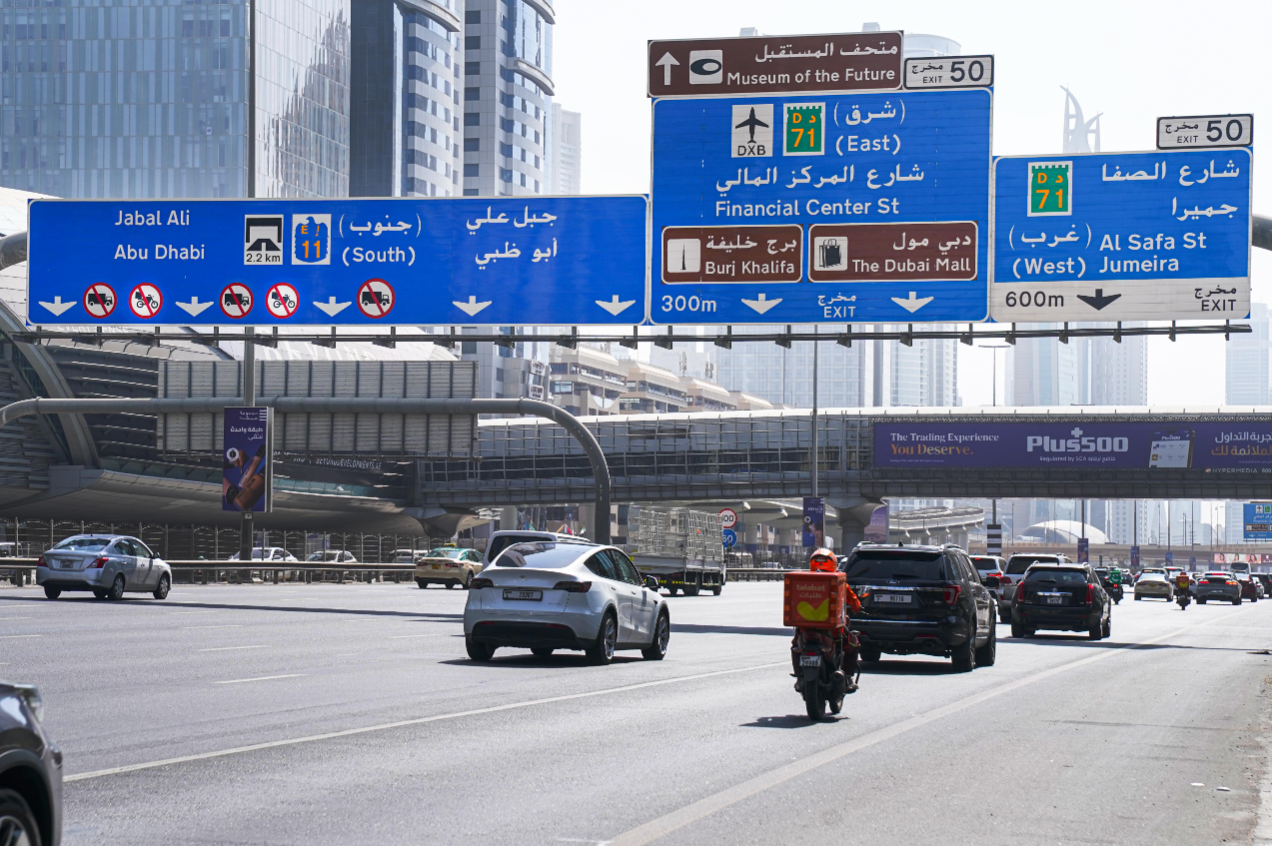
Dubai’s Roads and Transport Authority (RTA) and Dubai Police General Headquarters have introduced new regulations restricting delivery bike movement on high-speed lanes across the emirate, effective from November 1, 2025. According to the new rule set, delivery riders will no longer be allowed to use the two leftmost lanes on roads featuring five or more lanes, nor the leftmost lane on roads with three or four lanes. Roads with two lanes or fewer, however, will remain unrestricted for delivery bike usage.
Hussain Al Banna, CEO of the Traffic and Roads Agency at RTA, explained that this regulatory move is the result of extensive coordination with various stakeholders in both the public and private sectors to bolster road safety for riders. He stressed that the delivery sector has become an essential contributor to Dubai’s economic growth, driving improvements in service excellence, health, and safety standards. The initiative aligns with the Dubai Economic Agenda (D33), aiming to double the emirate’s economy while enhancing infrastructure and aligning governance with best international practices.
Al Banna also mentioned that the decision comes amid a significant increase in the delivery sector’s activity and fleet numbers. These new regulations stem from technical studies and safety measures developed as part of RTA’s governance framework. Over recent months, several consultative meetings were organized with government bodies, private companies, and consulting firms to formulate standards that promote rider and public safety. RTA will collaborate with Dubai Police, the Department of Economy and Tourism, and delivery partners to enforce compliance. Signs indicating restricted lanes for commercial motorcycles will be installed, similar to current warnings barring heavy vehicles and trucks from fast lanes.
To ensure awareness, a wide-ranging public campaign will be launched across multiple media and advertising platforms in partnership with delivery service operators. Major General Saif Muhair Al Mazrouei, Assistant Commander-in-Chief for Operations Affairs at Dubai Police, commended the cooperative efforts between RTA and Dubai Police, noting that this partnership supports the Dubai Traffic Safety Strategy’s goal of minimizing road fatalities. He emphasized that the decision corresponds with the five-year executive plan of the strategy, which is built on four key aspects: enforcement, engineering, awareness, and administration. The regulation, he said, will enhance compliance, control traffic more efficiently, and help prevent avoidable collisions that endanger lives.
Major General Al Mazrouei warned that violators will face penalties ranging from AED 500 for a first offence to AED 700 for a second, while repeated violations could lead to permit suspension. Additionally, riders exceeding 100 km/h on roads where that speed is permitted face fines between AED 200 and AED 400, depending on recurrence. He highlighted that delivery motorcycle incidents have notably risen, citing 854 accidents last year and 962 in 2025, both linked to traffic violations. Dubai Police recorded 70,166 violations last year, with an increase to 78,386 in the first nine months of the current year — evidence of persistent unsafe riding habits. Noting motorcycles’ susceptibility to severe accidents due to lack of protection, Al Mazrouei said the new regulation would significantly reduce fatalities and promote responsible riding behaviour.
In conclusion, RTA and Dubai Police announced that companies ensuring rider compliance with lane restrictions will be honoured under the “Delivery Sector Excellence Award.” This initiative seeks to promote healthy competition among delivery operators, reinforce traffic law adherence, enhance road safety across Dubai, and further elevate quality and service standards in the sector.